
What should be in your building contract in WA: a buyer checklist
By Nadia Delgado · Updated 2026-07-08
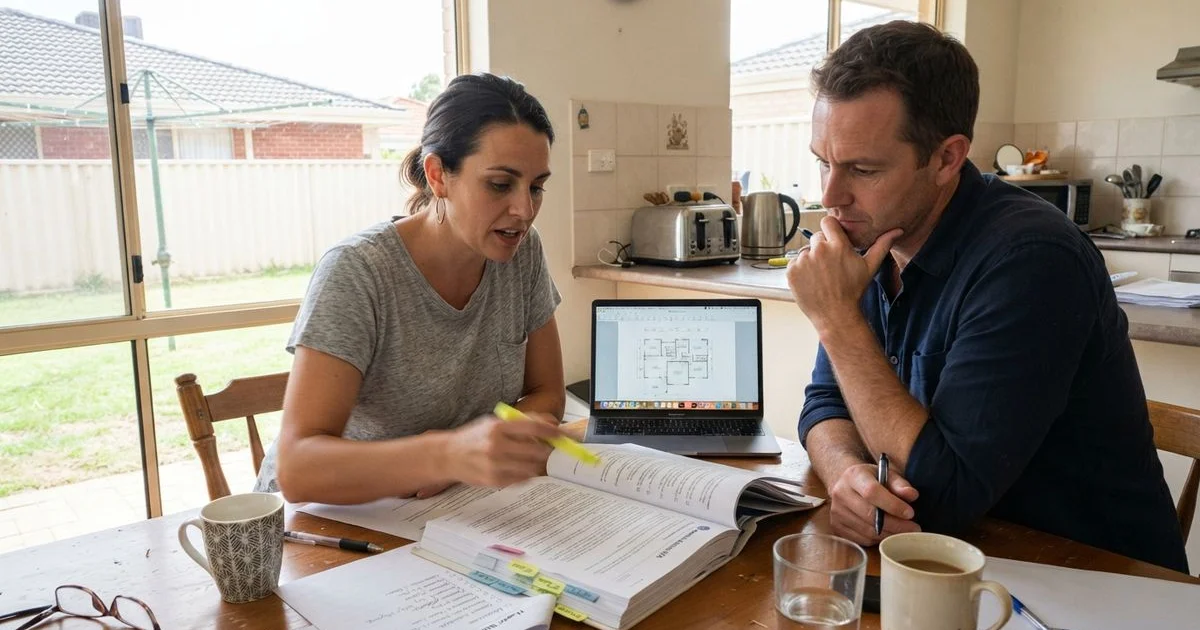
A building contract is the document that determines what happens when something does not go to plan, which is exactly why it deserves more attention than the excitement of choosing finishes usually allows. This is general information about what to look for, not legal advice for your specific contract; a solicitor experienced in building law can review the actual document before you sign.
The core clauses worth reading carefully
Every WA building contract should clearly state the contract price, what type of contract it is (fixed-price or cost-plus), the construction period, and the payment schedule tied to build stages. If any of these are vague, ambiguous, or missing entirely, that is worth raising before you sign, not after work has started.
Provisional sums deserve particular attention. These are allowances for items that cannot be finalised yet, commonly site works, tiling, and sometimes driveways or landscaping. A contract with many large, loosely defined provisional sums carries more budget risk than one with most costs locked in. Ask for provisional sums to be itemised and, where possible, capped.
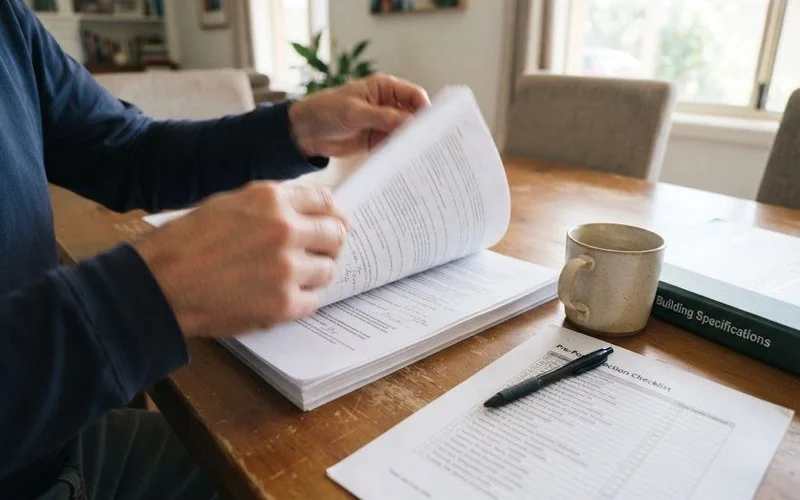
A checklist before you sign
| Item | What to check |
|---|---|
| Contract type | Fixed-price or cost-plus, and what that means for your budget risk |
| Provisional sums | Itemised, capped where possible, not vague allowances |
| Construction period | A stated timeframe, plus what counts as an excusable delay |
| Payment schedule | Tied to verified build stages, not arbitrary dates |
| Variations process | How changes are priced, documented and approved by you |
| Defects liability period | Length of cover and what is explicitly included |
| Insurance | Current home indemnity insurance certificate sighted |
| Dispute resolution | A clear process if disagreements arise during or after the build |
The insurance line matters most if a builder cannot finish the job at all: our guide to home building warranty insurance in WA explains what that cover does and does not protect against.
Variations: where good intentions go wrong
Almost every build involves at least a small change along the way, whether that is moving a power point or upgrading a fixture. The contract should specify how variations are priced and require your written approval before work proceeds, with a documented cost attached. Verbal agreements to “just do it and we will sort the cost later” are a common source of disputes precisely because there is nothing in writing when the invoice arrives higher than expected.
Dispute resolution and your protections
Check what the contract says about resolving disagreements, since most WA building contracts point toward a formal process through the Building Commission or, for larger disputes, the State Administrative Tribunal, before matters escalate to court. Knowing this process exists before you need it makes it far less stressful if a genuine dispute arises.
A builder’s contract terms often reflect how they operate more broadly. Builders with a track record of clear, itemised contracts and transparent variation processes tend to also score well on communication and delivery consistency in client reviews, so it is worth checking a builder’s review history alongside the contract itself.
Reading the fine print on inclusions and exclusions
A contract’s schedule of inclusions is where the practical detail lives, and it deserves the same scrutiny as the price and payment terms. Check whether items like driveways, fencing, landscaping, flyscreens and window treatments are included or listed as exclusions, since these are commonly left out of a headline price and can add a meaningful amount once tallied together. If a specific brand or model of fixture matters to you, ask for it to be named in the contract rather than described generically, since a generic description gives the builder room to substitute a cheaper equivalent.
Getting a second set of eyes before you sign
Even a well-drafted, standard-form contract benefits from a second read by someone other than the person selling it to you. A solicitor experienced in building contracts can usually review a standard residential contract for a modest fixed fee, and flagging one ambiguous clause before signing is far cheaper than resolving a dispute over the same clause a year into the build. Treat this review as a normal part of the process, not a sign of distrust toward your builder.
See our methodology for how we score builders on this site, and visit the homepage to compare across other categories.
Questions people ask
- What is a provisional sum in a building contract?
- It is an estimated allowance for an item that cannot be priced exactly yet, like tiling or site works. The final cost can come in above or below that estimate, and it is a common source of budget disputes if not itemised clearly.
- Should a building contract have a fixed completion date?
- Yes, a genuine contract should specify a construction period or target completion date, along with what happens if delays occur that are outside your control versus the builder's control.
- What is a defects liability period?
- A set period after handover, commonly three to twelve months, during which the builder is obligated to fix defects that appear. Check what is explicitly covered and for how long.
- Should I get a contract reviewed by a solicitor before signing?
- For a significant financial commitment like a home build, yes. A solicitor can flag ambiguous clauses or missing protections that are easy to miss when reading a contract for the first time.