
Display home vs custom-designed home: what is the difference
By Nadia Delgado · Updated 2026-06-08
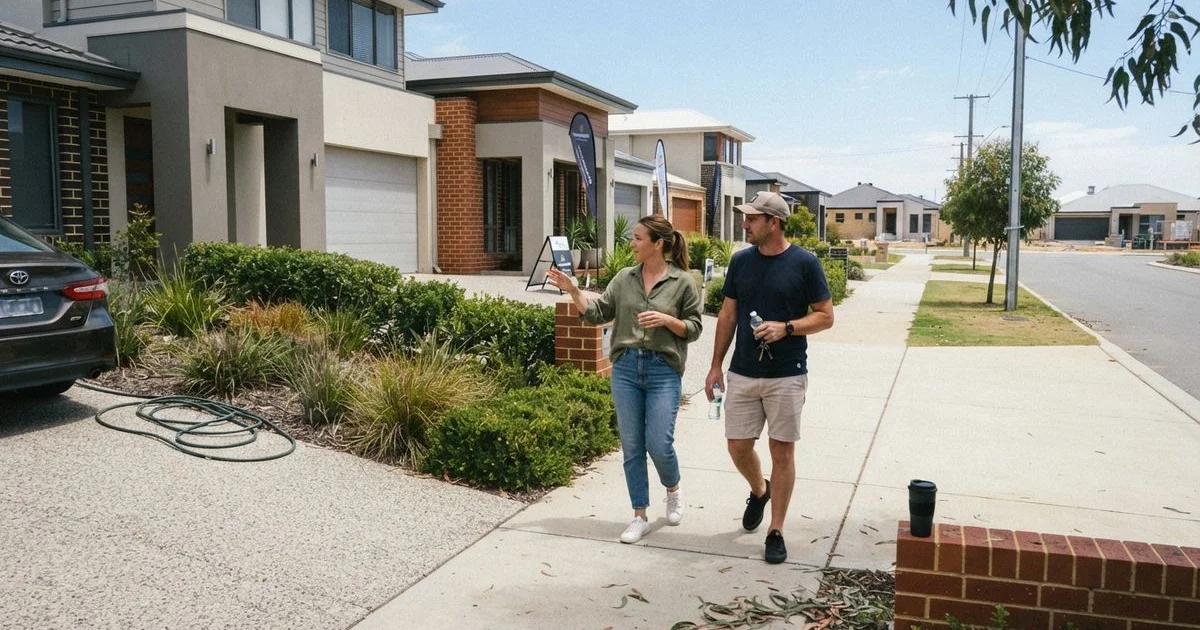
Perth buyers building a new home usually choose between two very different models: a display or volume home built from a catalogue, or a custom design built around a specific block and brief. Both can produce a great result. The right choice depends less on taste and more on your block, your budget certainty needs, and how much say you want in the details.
What a display or volume home actually is
Volume builders run display villages across Perth’s growth corridors, from Baldivis to Ellenbrook, showing off a set range of floor plans you can choose from and adjust in minor ways. Because the same design gets built repeatedly, volume builders can buy materials in bulk and standardise their processes, which keeps prices down and build times shorter. You are trading some flexibility for cost certainty and a faster path from contract to keys. If you are buying land and a display home together as one deal, the house and land packages guide covers what is usually bundled into the price and what to check before you sign.
What a custom design involves
A custom build starts with your block and your brief rather than an existing plan. This matters most on sloping sites, narrow infill lots, coastal blocks needing corrosion-resistant materials, or heritage-affected areas closer to the city, where a standard catalogue design simply will not fit or perform well. Custom builders spend more time upfront on design, engineering and council documentation, and the build itself typically runs longer, often eight to fourteen months against a display home’s faster turnaround.
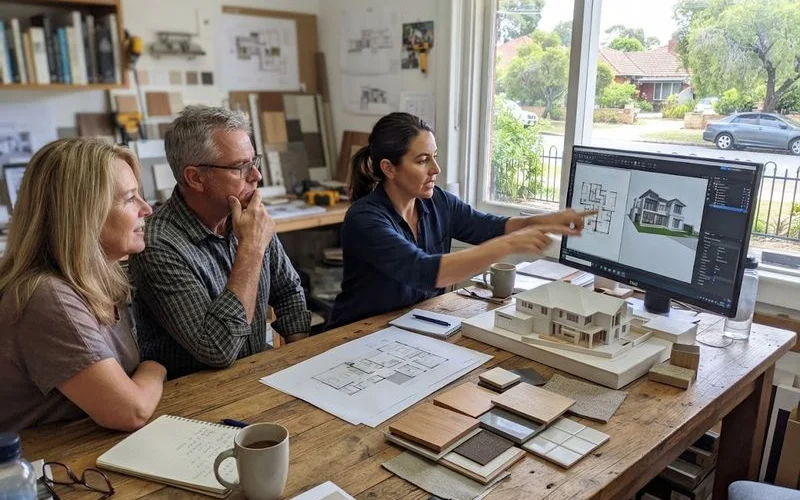
Comparing the two side by side
| Display / volume home | Custom-designed home | |
|---|---|---|
| Best suited to | Standard, level blocks in new estates | Sloping, narrow, heritage or coastal blocks |
| Price certainty | High, fixed catalogue pricing | Lower until design is finalised |
| Design flexibility | Limited, minor changes only | Full control over layout and finish |
| Typical timeline | Faster, proven design and process | Longer, design plus documentation adds months |
| Who it suits | First home buyers, tight budgets, standard blocks | Buyers with a specific site or non-negotiable brief |
What actually drives the decision
Your block is the biggest factor. A flat, rectangular block in a new estate is exactly what volume builders design for, so fighting that with a custom build usually just adds cost without adding value. A sloping or irregular block, on the other hand, often makes a standard catalogue plan impossible to place well, and a custom design ends up cheaper in practice once you account for the retrofitting a volume builder would need to do.
Budget certainty matters too. Volume builders quote against a known design, so surprises are rarer, though site costs and upgrades still apply. Custom builds carry more variables because the design keeps evolving until it is locked in, and Perth’s mix of sandy and reactive clay soils means site costs can shift a custom budget more than buyers expect. Ask any builder, whichever model you are leaning toward, for a fixed-price contract with a clear provisional sums schedule rather than open-ended allowances.
If you want to compare Perth’s volume and display builders directly, our display home and volume builders category lists active operators, along with reviews covering build quality and inclusions transparency. Builders working on genuinely custom, site-specific projects sit in a separate part of the market and are worth shortlisting separately if your block needs that approach.
A middle path exists too
Some builders offer a hybrid: a base catalogue design with more generous customisation options than a strict volume builder allows, aimed at buyers who want some design input without full custom pricing. If neither extreme fits, ask builders directly how far they will flex a standard plan before it counts as a custom job, since the pricing model usually changes at that point.
Visiting display homes with the right questions in mind
Walking through a display village is genuinely useful, but it helps to go in with specific questions rather than just admiring the finish. Ask which fixtures, flooring and joinery shown are standard inclusions versus paid upgrades, since display homes are built to display the range’s top end, not its typical build. For a custom builder, ask instead to see a home they completed for a client with a brief similar to yours, since a completed job on someone else’s block tells you more than a concept render ever will.
Before signing with any builder, our methodology explains how we score builders on consistency, communication and verified outcomes, which applies whether you end up going display, custom or somewhere in between. Start from the homepage if you want to browse builders across every category first.
Questions people ask
- Is a display home the same as a project home?
- Yes, in Perth these terms are used for the same thing: a home built from a builder's existing catalogue of designs, sold under a volume building model.
- Can I customise a display home design?
- Most builders allow limited changes, like swapping a window or moving an internal wall, for an extra fee. Structural changes to the footprint usually push you toward custom pricing.
- Which option is faster to build?
- Display and volume homes are generally faster because the design is proven and materials are ordered at scale. Custom homes take longer for design, documentation and council approval before the build even starts.
- Which is cheaper, custom or display?
- Display and volume homes are usually cheaper per square metre for a standard block. Custom builds cost more but suit sloping, narrow or heritage-affected blocks that a catalogue plan cannot handle well.
Related on this site
- Browse display home & volume builders providers
- Best display home & volume builders in Perth metro →
- House and land packages in Perth: how they work and what to check
- Building a new home in Perth: the process from site start to handover
- Questions to ask a custom home builder before you sign in Perth
- All guides →