
Building a new home in Perth: the process from site start to handover
By Nadia Delgado · Updated 2026-06-18
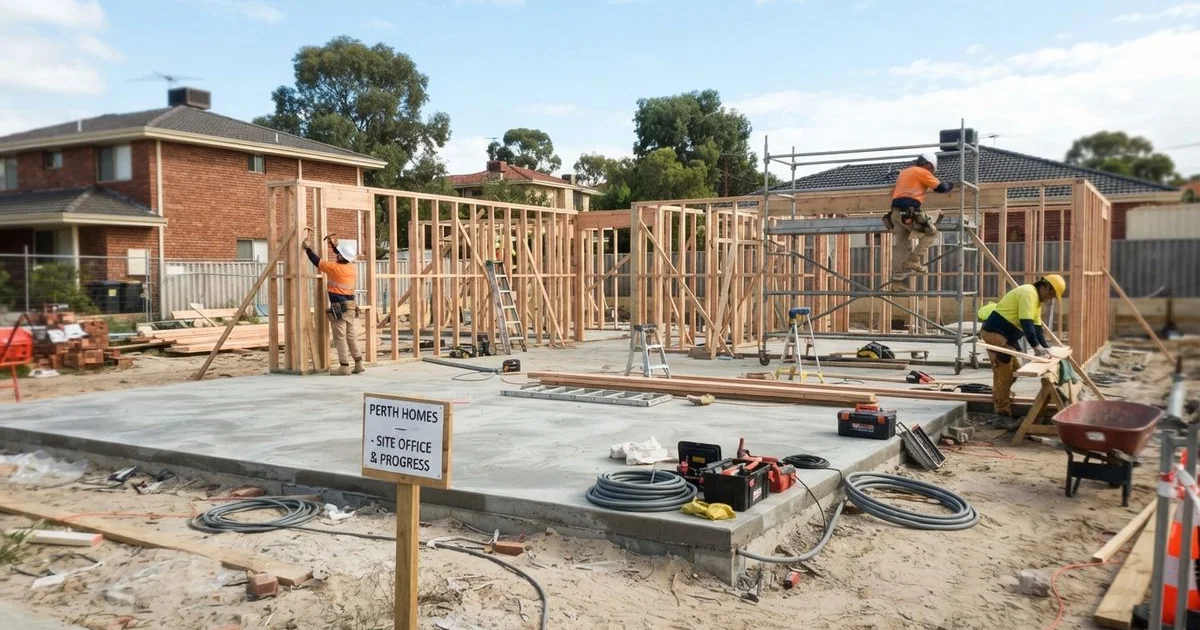
Building a new home involves a sequence of stages that can feel opaque if you have not done it before. Knowing what happens at each stage, and roughly how long it should take, makes it much easier to tell whether your build is on track or quietly slipping. If you are still at the planning stage, our building your first home in Perth guide covers budgeting and choosing a builder before site works even begin.
Before site works: design and approval
Before a shovel touches the ground, your plans need council approval (or building surveyor certification for many project homes) and your finance needs to be unconditional. This stage can take anywhere from a few weeks for a straightforward volume-builder design to several months for a custom home requiring detailed engineering and a heritage or planning assessment. Soil testing usually happens here too, which determines your footing design and can affect price if the results come back worse than expected.
The build stages, one by one
| Stage | What happens | Typical share of build time |
|---|---|---|
| Site works and slab | Clearing, levelling, footings, concrete slab poured | ~10% |
| Frame | Timber or steel frame erected, roof trusses go up | ~15% |
| Lock-up | Roof covering, external walls, windows and doors fitted | ~25% |
| Fixing | Insulation, plasterboard, cabinetry, tiling, electrical and plumbing fit-off | ~35% |
| Completion | Final fittings, painting, cleaning, pre-handover inspection | ~15% |
Lock-up is a milestone worth watching closely: once your home is at lock-up, the site is weatherproof and progress payments usually step up, so it is a good time to walk through and check the build matches your plans before walls are lined and finishes go on.
What slows a build down
Weather affects site works and roofing more than any other stage, and Perth’s wetter winter months can push back a slab pour or roof installation by weeks if rain is persistent. Trade and material availability is the other common cause, particularly for items with longer lead times like custom cabinetry, imported tiles or specific window hardware. A builder who flags likely delays early and explains why is a better sign than one who avoids the conversation until you ask.
Council approval timing before the build even starts is worth planning for separately. Straightforward applications on standard blocks can clear in a matter of weeks, but anything involving a variance, a heritage overlay or a complex site can take considerably longer, and that time sits outside the builder’s control.
What to expect from your builder during the build
A responsive builder keeps you updated at each stage change, not just when you ask. Reviews across Perth builders consistently flag communication and on-time, on-budget delivery as the things that separate a good experience from a frustrating one, more than the finish quality itself in many cases. Ask upfront how often you will get updates and who your main point of contact is, whether that is a site supervisor or a client liaison person.
If you are still shortlisting a builder, our home builder category lists options across Perth metro with reviews covering exactly these communication and delivery patterns, alongside build quality feedback.
Handover and what comes after
Before handover, walk through the home with your builder and note anything that needs fixing on a defects list, formally called a practical completion inspection in many contracts. Most Perth builders offer a defects liability period, commonly three to twelve months, during which they are obligated to fix issues that show up as the home settles. Keep this paperwork; it matters if a dispute comes up later.
Staying on top of the small decisions along the way
Beyond the big milestones, a build involves a steady stream of smaller decisions: fixture selections, colour choices, and confirming variations if you request a change. Falling behind on these can delay the schedule just as much as a weather event, since trades often cannot proceed until a selection is finalised. Keeping a shared checklist with your builder of what is due and by when helps avoid your own decisions becoming the bottleneck.
What a first site visit at frame stage tells you
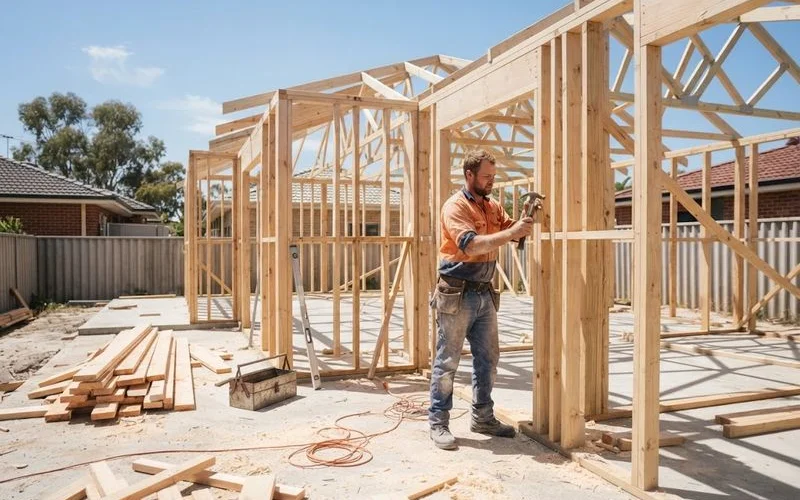
Seeing your home at frame stage for the first time is often when a build starts to feel real, and it is a good opportunity to check room sizes and window placements against your expectations while changes are still relatively simple to make. Bring your plans along and walk through each room, checking door swings, window positions and ceiling heights match what you agreed to, since this is one of the last points where structural adjustments remain straightforward.
See our methodology for how we score builders on delivery consistency and client feedback, and browse the full range of categories from the homepage if you are still comparing builder types.
Questions people ask
- How long does it take to build a house in Perth?
- A single storey home typically takes around 6 months once site works start, while a double storey home runs closer to 8 months. Add time before that for design, council approval and finance, which can add several more months.
- What causes the biggest delays during a Perth build?
- Weather during site works and roofing, trade availability, and material or fixture delays are the most common causes. Council approval timing before the build starts is also a frequent source of delay.
- What are the main stages of a home build?
- Site works and slab, frame, lock-up (roof, windows, external walls), fixing (internal linings, cabinetry, tiling) and completion, which includes final fittings and inspections before handover.
- Do I need to visit the site during construction?
- You are not required to, but most builders welcome site visits at key stages, particularly frame and lock-up, so you can check progress and ask questions before things are covered over.