
Site safety during a home build: what responsible builders do
By Nadia Delgado · Updated 2026-08-17
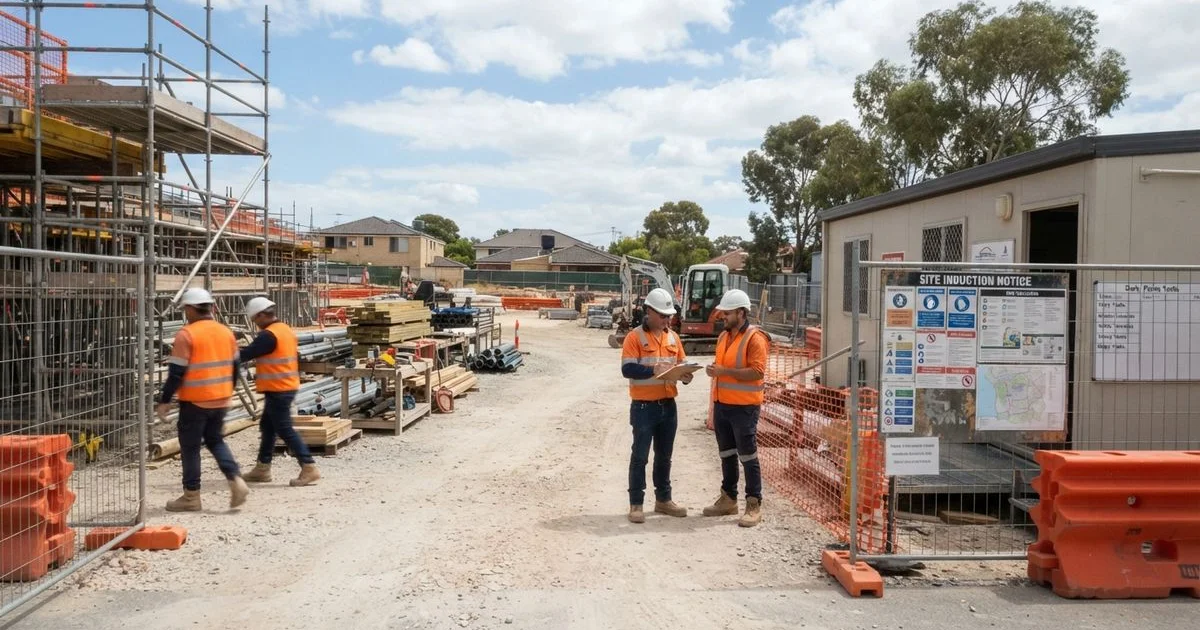
Site safety on a home build might feel like it is entirely the builder’s concern, but as the person whose project is underway, it affects your timeline, your costs, and occasionally your own safety if you visit the site during construction.
Why this matters beyond the obvious
A serious safety incident on your site does more than create a human tragedy to avoid. It can trigger a WorkSafe investigation, a site shutdown while the incident is reviewed, and delays that ripple through your build schedule. Builders with a strong safety culture tend to also run tighter, better-organised sites generally, since the discipline that prevents accidents overlaps a lot with the discipline that keeps a project on schedule and on budget.
What responsible site safety looks like
Falls from height are one of the most common serious hazards on a residential build, particularly during frame erection and roofing work, so proper edge protection, secure scaffolding, and appropriate use of harnesses where required are basic expectations, not extras. Excavation and trenching during site works carry their own risks, especially on Perth’s variable soil types, and should be managed with appropriate shoring or batter angles rather than left as an open hazard.
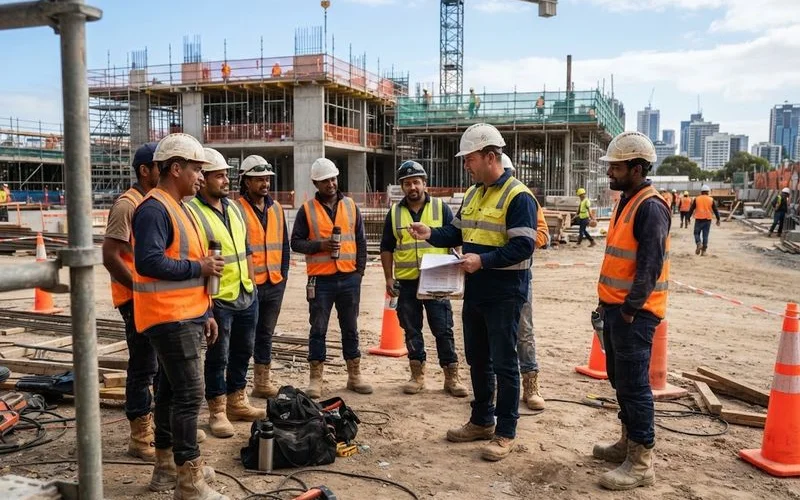
What to expect if you visit your site
| Expectation | What it looks like |
|---|---|
| Personal protective equipment | Hard hat, high-visibility clothing, closed footwear provided or required |
| Site induction or briefing | A quick rundown of current hazards before you walk through |
| Supervised access | Accompanied by the site supervisor, not wandering unsupervised |
| Clear site organisation | Materials stored tidily, walkways kept clear |
| Signage | Hazard warnings and site rules visible at the entrance |
If a builder waves off these basics or seems unbothered by you walking around unsupervised, take that as a signal about how the wider project is being run, not just a minor lapse.
Questions worth asking before you sign
Ask how the builder manages site safety day to day, whether they have a documented safety plan for the project, and how they handle subcontractor inductions, since most of the trades on your site will be subcontracted rather than direct employees. A builder who answers these questions readily and specifically, rather than with a generic assurance, is generally one that takes the obligation seriously.
Our construction company category lists Perth builders and construction firms, and reviews sometimes mention site organisation and professionalism, which can be a useful proxy for how seriously a builder treats safety more broadly.
Site safety involves genuine risk to health and legal obligations under WA work health and safety law, so this guide is general information rather than a substitute for specific WorkSafe guidance relevant to your project.
What a well-run site looks like day to day
Beyond the visible signage and protective equipment, a well-run site tends to have a predictable rhythm: trades arriving at scheduled times rather than overlapping chaotically, materials delivered close to when they are needed rather than stacked haphazardly for weeks, and a site supervisor who is genuinely present rather than managing several sites remotely. These operational habits reduce safety risk almost as a side effect of running an efficient, well-managed project, which is another reason site organisation is worth paying attention to beyond the safety signage alone.
If you notice a hazard yourself
If you visit your site and notice something that looks unsafe, such as exposed reinforcement steel, an unsecured excavation, or materials stacked precariously, raise it with the site supervisor directly rather than assuming someone else has already flagged it. A responsible builder will take this feedback seriously rather than treating it as an unwelcome intrusion, since an owner catching a hazard early can prevent a genuinely serious outcome.
Weather and seasonal safety considerations
Perth’s summer heat adds its own safety dimension to a build, since outdoor trades working through the hottest parts of the day face a genuine heat stress risk. Builders with good safety practices typically schedule the most physically demanding outdoor work for cooler morning hours during summer months and ensure adequate shade and water access on site. Winter brings a different set of considerations, with wet weather making site surfaces slippery and increasing the risk of slips during site works and roofing stages specifically. Demolition and older-home hazards sit in a different category entirely; if your project involves knocking down an existing house, see our guide on asbestos and demolition safety for what a pre-demolition assessment involves.
See our methodology for how we score builders on this site, or visit the homepage to browse other categories.
Questions people ask
- Am I responsible for site safety on my own building project?
- Generally the builder, as the person in control of the construction site, carries the primary work health and safety obligations, but as the owner it is reasonable to ask about their safety practices before signing.
- Should I visit an active construction site without safety gear?
- No. Any site visit should follow the builder's safety requirements, which usually means a hard hat, high-visibility clothing and closed footwear, and being accompanied rather than wandering unsupervised.
- What are common safety hazards on a Perth home build?
- Falls from height during frame and roofing work, trench and excavation hazards during site works, and manual handling injuries are among the most common risks on a residential build.
- Does a builder's safety record affect my project directly?
- Yes, indirectly. A builder with poor safety practices is more likely to face site shutdowns, delays following an incident, or increased insurance costs, all of which can affect your project's timeline.