
Knockdown rebuild in Perth: is it worth it and what is involved
By Nadia Delgado · Updated 2026-08-02
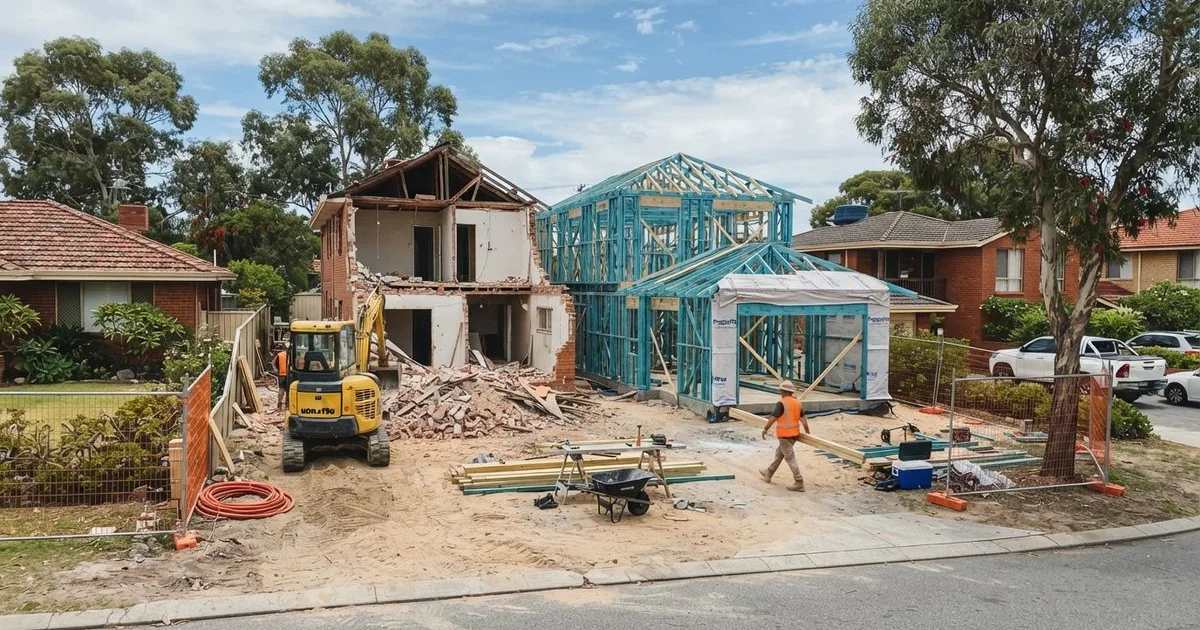
A knockdown rebuild means demolishing an existing house and building new on the same block, and it is a genuine option worth comparing against renovating for Perth homeowners on well-located blocks with a tired or poorly laid out house. It is a bigger financial and logistical commitment than a renovation, so it is worth understanding the full process before deciding.
When a rebuild beats a renovation
A knockdown rebuild tends to make more sense when the existing house has significant structural issues, an outdated floor plan that cannot be reworked cost-effectively, or sits on a block in a location that justifies a much larger investment than the current home reflects. If your renovation wish list starts touching the roofline, most internal walls and the slab, the cost gap between a heavy renovation and a full rebuild often narrows enough that starting fresh makes more sense.
Renovating usually wins when the existing structure is sound and the changes needed are more contained, like an extension, a kitchen and bathroom refresh, or a second storey addition that does not require touching the whole footprint.
What the process actually involves
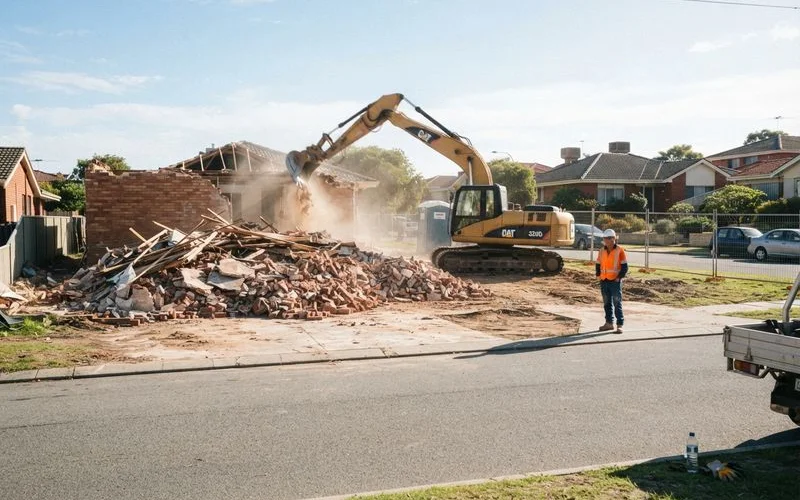
Demolition comes first, and on older Perth homes, particularly those built before the 1990s, a pre-demolition asbestos assessment is a standard step, since asbestos was widely used in building materials during that period. Site works follow, which can include additional costs if the existing footings or services need to be fully removed rather than reused. From there, the build proceeds through the same stages as any new home: slab, frame, lock-up, fixing and completion.
What drives the cost
| Cost driver | Why it matters |
|---|---|
| Demolition and site clearing | Varies with house size and access; harder access adds cost |
| Asbestos assessment and removal | Common on pre-1990s homes, can add meaningfully to the budget |
| Existing services (power, water, sewer) | Reuse versus full replacement affects site costs |
| New build design and finish level | Same drivers as any new home build |
| Site access during demolition | Narrow or sloped access increases equipment and labour costs |
A knockdown rebuild essentially stacks demolition costs on top of standard new build costs, so budgeting accurately means getting both pieces quoted properly rather than assuming demolition is a minor line item.
Living arrangements and timing
Unlike most extensions, a knockdown rebuild requires vacating the property entirely for the full build period, commonly nine months to over a year depending on design complexity and approval timelines. Factor rent or alternative accommodation costs into your overall budget, and plan the timing of your move out around confirmed demolition and start dates rather than optimistic estimates, since approvals can shift the schedule.
Choosing the right builder for this type of project
A knockdown rebuild needs a builder or construction company comfortable managing both the demolition and site works phase and the build itself, ideally with direct experience on similar projects rather than only new-build-on-vacant-land work. Ask specifically about their experience with asbestos-affected sites and how they coordinate the handover between demolition and construction, since gaps between these phases can extend your timeline. This is also a project where a builder’s financial stability matters more than usual, given the extended timeline; if you want to know what to do should a builder run into trouble mid-build, see our guide on what to do if your home builder goes into liquidation.
Checking what you can keep or reuse
Not everything on a block needs to go with the old house. Established trees, retaining walls in good condition, driveways, and sometimes existing power and sewer connections can often be retained or reused, which reduces both cost and environmental waste. Ask your builder or demolisher to assess the site specifically for what is worth keeping before demolition starts, rather than clearing the block entirely as a default approach.
Weighing the emotional side of demolishing a family home
For many Perth homeowners, the house being demolished holds real memories, and it is worth acknowledging that a knockdown rebuild is not a purely financial decision even when the numbers clearly favour it. Some families choose to salvage specific fixtures, fittings or materials with sentimental value before demolition, which a builder experienced in this process can usually help arrange without adding significant cost or delay to the project.
See our methodology for how builders on this site are scored, or head to the homepage to compare builders across categories.
Questions people ask
- How do I know if a knockdown rebuild makes more sense than renovating?
- If the existing house needs major structural work, has an outdated layout that cannot be fixed with a renovation, or sits on a valuable block that could support a much better home, a rebuild is often worth comparing seriously against renovation costs.
- Do I need to move out during a knockdown rebuild?
- Yes, unlike most extensions, a knockdown rebuild requires the whole house to come down, so you will need alternative accommodation for the full build period.
- Is asbestos a concern with older Perth homes being demolished?
- It can be, particularly in homes built before the 1990s. A pre-demolition asbestos assessment is a standard and often required step before demolition begins.
- How long does a knockdown rebuild take from start to finish?
- Including demolition, site works and the build itself, a knockdown rebuild commonly takes around nine months to over a year, depending on design complexity and approvals.